Last updated: November 14, 2026
Key Takeaways
- The goal is to feed the starter and share charge across the parallel system, not split the batteries into separate tasks.
- Connect to the truck’s 12-volt parallel system, usually through the designated jump point or battery posts.
- Wait for the glow plug preheat cycle before cranking; diesel engines often need that heat to start cleanly.
- A dual battery diesel jump start works best with clean clamp order, a running donor, and brief pre-crank charging.
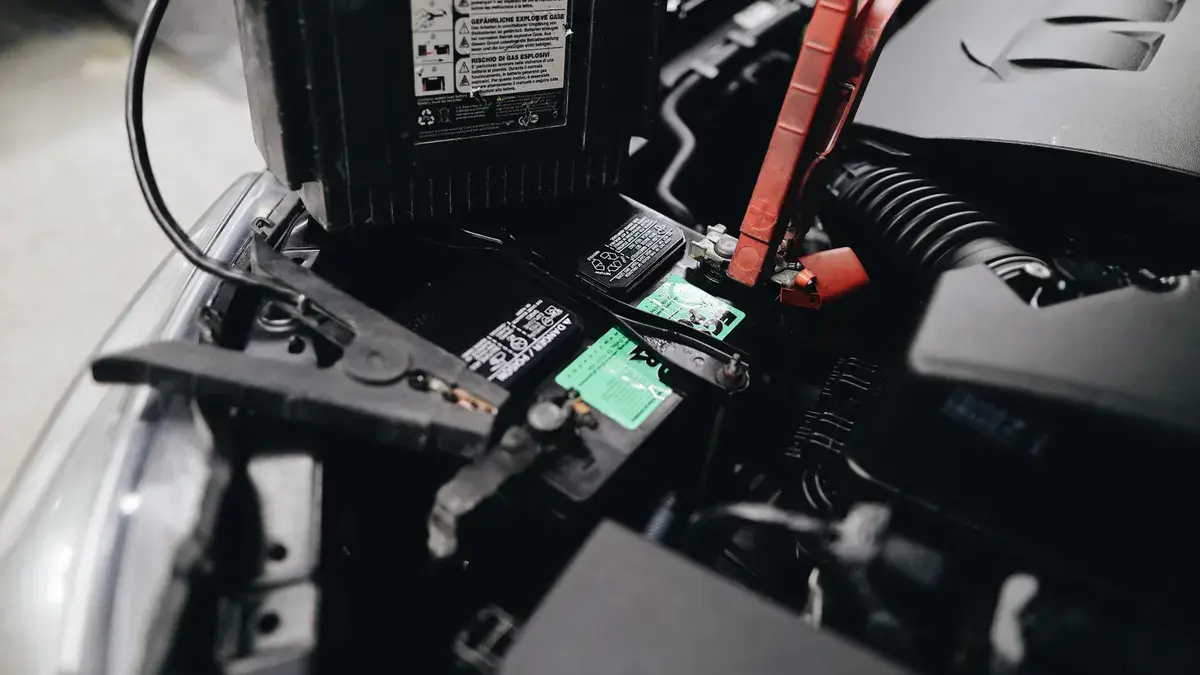
Your diesel truck with dual batteries won’t crank because the parallel 12v system needs enough current at the starter, and low temperatures or glow plugs can drain that reserve fast. How to Jump Start a Diesel Truck with Dual Batteries is to treat it as one 12-volt system, not two separate batteries. The steps below show which post to use, how long to wait for the glow plug preheat cycle, and where the starter relay fits in. For a general overview of jump-start safety, see AAA’s advice and the National Safety Council’s battery safety guidance.
The short answer for a dual battery diesel jump start
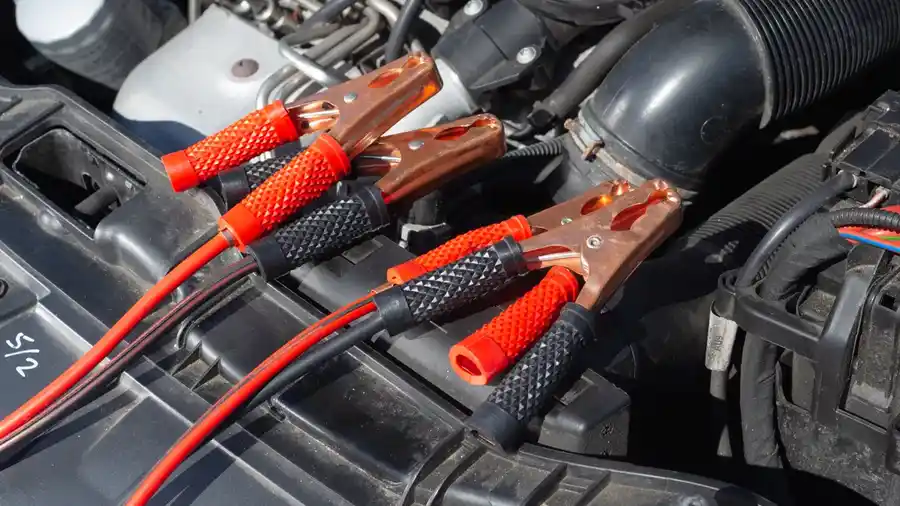
A dual battery diesel jump start uses one good 12-volt donor source, heavy gauge cables, and the truck’s designated jump point or battery posts tied into the same parallel wiring path. The goal is to feed the starter and let the batteries share charge, not to treat each battery as its own job.
Picture this: you’re standing by a dead diesel truck in a lot, and both batteries look fine but the engine only clicks. You don’t need a special two-starter setup. You need the right connection order, a little patience for the glow plug power draw, and enough cable capacity to move real current.
Here’s the catch:
- A diesel can need more cranking current than a gas engine.
- The glow plugs may draw power for several seconds before cranking.
- A weak cable or a bad clamp can make a full battery look dead.
Use a donor vehicle with a healthy 12-volt system or a portable jump pack rated for diesel use. On many trucks, use the underhood jump point if the maker provides one. If not, go to the battery posts themselves and keep the clamps tight. For a general overview of how jump starting works across vehicles, the hub page on vehicle jump starting procedures can sit alongside this guide.
Which battery do you connect to on a dual battery diesel?
You connect to the truck’s parallel 12v system, not just one battery by guesswork. On most dual-battery diesel setups, both batteries are wired together in parallel, so a proper jump on either the designated jump point or the main battery posts feeds the same starting circuit.
Picture this: you open the hood and see two batteries side by side. One is clearly weaker, but the other might still be part of the same load path. If the truck uses a factory jump post, use that first; it’s there to keep the connection simple and reduce clamp mistakes.
Use this order:
- Turn both vehicles off.
- Connect the red clamp to the truck’s positive jump point or positive battery post.
- Connect the other red clamp to the donor positive terminal.
- Connect the black clamp to the donor negative terminal.
- Connect the last black clamp to a solid metal ground on the truck, away from the battery.
That last step matters. A clean engine block ground or chassis ground lowers the chance of a spark at the battery. If the truck has a battery selector, isolate switch, or service instructions that say to use a specific post, follow that layout. A few heavy-duty rigs place the jump point near the fuse box, while others want direct battery contact.
On the flip side, don’t clamp one battery and assume the other will sort itself out if the cable links are corroded or loose. A failed connection between batteries can leave you chasing a false problem.
How to use the glow plug preheat cycle without killing the jump
You wait for the glow plug preheat cycle before cranking, because diesel fuel often needs that heat to start cleanly. The first load after the jump connection is not the starter motor alone; it’s the glow plug draw, and that can be enough to make a weak setup collapse if you rush.
Picture this: the cables are on, the dash lights wake up, and you’re tempted to twist the key right away. Don’t. Let the truck finish its preheat cycle, which may last only a few seconds or a bit longer depending on temperature and engine design.
Use this sequence:
- Connect the cables and let the donor run at idle.
- Turn the ignition to the preheat position.
- Wait for the glow plug indicator to go out or for the vehicle’s preheat cycle to finish.
- Crank in short bursts, not long holds.
- Pause briefly if the first attempt doesn’t catch.
Because of that extra heat demand, the preheat step matters even more in cold weather. A diesel in low temperatures can ask for more battery reserve, and the glow plugs may stay active longer. If the truck has a starter relay that clicks but doesn’t spin, that does not automatically mean the starter is bad. It can mean the batteries are still low, the clamps are poor, or the preheat draw is too much for the current supply.
The truth is, many jump attempts fail because the driver cranks too soon. The glow plugs take the first bite out of the battery reserve. Give them that time, then go to the starter.
The step-by-step jump start procedure that works on dual batteries
A dual battery diesel jump start works best when the clamp order is clean, the donor stays running, and the truck gets a brief charge before cranking. The whole process is simple, but the details decide whether it turns over or just clicks.
Picture this: you’ve got 20 feet of cable, a donor truck, and a diesel that won’t fire. The job is to move current without making the connection the weak point.
Follow these steps:
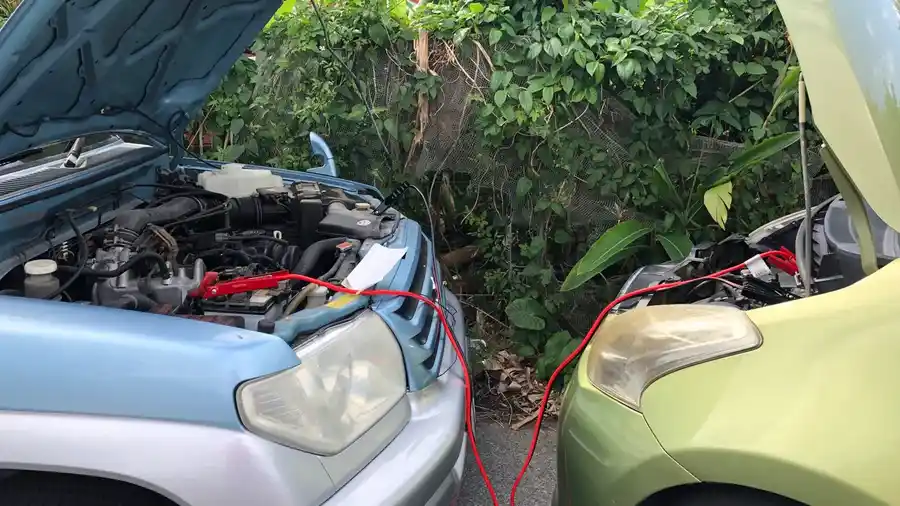
- Park the donor vehicle close enough for the cables to reach without stretching. Keep the vehicles from touching.
- Shut both ignitions off and remove the key.
- Attach the red clamp to the truck’s positive jump point or positive battery post.
- Attach the other red clamp to the donor vehicle’s positive terminal.
- Attach the black clamp to the donor negative terminal.
- Attach the final black clamp to a bare metal ground on the truck, away from the battery.
- Start the donor vehicle and let it idle for a few minutes.
- Turn the truck key to preheat and wait for the glow plug cycle.
- Crank the truck for a short burst.
- If it starts, let it idle with the cables still attached for a short time before disconnecting in reverse order.
A few details keep this from going sideways. Use heavy gauge cables, because thin ones waste current as heat. Keep clamps on clean metal, because paint, rust, and oily grime all add resistance. If the truck has a factory jump point, use it instead of hunting for the most convenient post. And if the engine only clicks after one or two short cranks, stop and reassess rather than cooking the starter.
Do not hold the key in start for a long run. Diesel starters are built for high load, but they are not meant to grind forever against a dead battery bank. Short bursts keep heat down and give the batteries time to recover.
Common mistakes that make dual battery jump starts fail
The most common mistake is treating a dual battery diesel like a single small car battery. That mistake wastes time, heats cables, and can leave the starter relay chattering without enough amperage to spin the engine.
Picture this: the donor is running, the clamps look fine, and nothing happens except a faint click. That is often a connection problem, not a mystery electrical fault.
Watch for these errors:
- Connecting to the wrong point. Some trucks want the designated jump post, not the easiest battery terminal.
- Using light-duty cables. Thin leads choke current on a diesel load.
- Skipping the ground clamp. A poor ground can kill the whole attempt.
- Cranking too long. A long crank overheats the starter and drains both batteries fast.
- Ignoring battery damage. A swollen, leaking, or frozen battery is not a normal jump target.
The trade-off is simple: faster setup versus safer current flow. The easier clip point is not always the right one. If the battery case is cracked, the terminals are loose, or you smell acid, stop. A jump start is meant to wake a healthy system, not rescue one that has failed mechanically.
A better approach is to check the truck’s underhood label or owner’s manual for the heavy duty diesel jump point. Many manufacturers mark that location for a reason. If both batteries are deeply discharged, even a correct jump may need a few extra minutes of donor idle before the first crank.
Why dual batteries share the load differently than you expect
Dual batteries in a diesel truck usually share the cold cranking amp distribution load because they are tied in parallel, so one weak battery can drag the other down. That is why a truck can still refuse to start even when one battery looks less dead than the other.
Picture this: one battery tests better than the other, so you assume the good one will carry the start. In a parallel setup, the weak battery can pull the system down and steal the donor’s charge as soon as the glow plugs and starter ask for power.
A few things matter here:
- The batteries age together poorly if one has been replaced and the other has not.
- Corrosion between the batteries or at the terminals limits the combined output.
- A failed battery can act like a load, not a helper.
That is also why a jump start can work once and fail again 10 minutes later. The truck may start, but the weak battery pair may not hold enough reserve to restart on its own. If the truck dies again after a short idle, the charging system or battery bank needs a real check.
A healthy alternator should recharge both batteries after the start, but a jump is not a full repair. If the truck repeatedly needs outside help, the issue may be more than a flat battery. The battery pair, the alternator, the starter relay, and the cable links all belong in the diagnosis.
What to do if it still won’t crank after a correct jump
If it still won’t crank, the problem is likely cable resistance, a bad battery in the pair, or a starter-side fault rather than a lack of jump power. At that point, repeating the same jump without changing the setup usually does nothing.
Picture this: the donor is idling, the glow plug cycle has finished, and the key still brings only a click or a slow groan. That means the current is not reaching the starter the way it should.
Check these items in order:
- Re-seat every clamp and scrape off visible corrosion.
- Move the ground clamp to a cleaner metal point.
- Wait a few more minutes with the donor running.
- Try a second short crank.
- If the result is still poor, stop and inspect the batteries and starter circuit.
A starter relay that clicks without cranking can be a clue, but not a final answer. Loose battery terminals, a bad ground strap, or a damaged interconnect cable between the two batteries can produce the same symptom. If you have a multimeter, a basic battery and voltage check can separate a bad battery from a bad connection.
On the flip side, do not keep hammering the key. A diesel starter under low voltage can overheat fast, and repeated failures can leave you with two dead batteries instead of one. If the truck has swollen batteries, a burnt smell, or visible cable damage, that is the point to stop and get hands-on help from a qualified mechanic or roadside pro.
Which battery do you connect to on a dual battery diesel?
Connect to the truck’s designated jump point or to the main battery posts that feed the parallel 12v system. The key is to energize the whole starting circuit, not pick one battery at random.
If the truck has a factory jump terminal, use that first. If not, connect to the positive post on the battery bank and a solid chassis or engine ground for the negative side. Follow the owner’s manual when it shows a specific post or ground point.
Do you need two jump starters for a diesel truck?
No, you usually do not need two jump starters for a diesel truck with dual batteries. One properly rated donor battery pack or one running vehicle with heavy gauge cables is the normal setup.
A second jump source only makes sense in unusual service situations or if the truck maker specifies a special procedure. For most drivers, the real issue is current delivery, not the number of jump devices. If one source is weak, use a stronger one instead of doubling up casually.
Drafted with AI; not yet reviewed by a person.
One thought on “How to Jump Start a Diesel Truck with Dual Batteries”