Last updated: November 12, 2026
Quick answer: rapid clicking during a jump usually means the starter solenoid is not getting stable voltage, and the fastest fix is often a bad cable clamp, corroded terminal, or weak jump connection under load. If you are dealing with Why a Car Still Clicks Rapidly and Won’t Start When Jumped, the steps below help you find the fault without guessing.
Why Why a Car Still Clicks Rapidly and Won’t Start When Jumped happens even with jumper cables on
Picture this: you’ve hooked up jumper cables, turned the key, and the car answers with machine-gun clicks instead of a crank. You already know the battery was weak, but the jump did not change the result, which means the starter solenoid is not getting steady power.
The usual reason is voltage drop under load. A cable can look fine and still pass almost no current once the starter asks for it. The solenoid pulls in, the voltage falls, the plunger contact opens, then it pulls in again. That fast on-off cycle is the clicking you hear.
A jump can fail for three main reasons:
- The donor battery is weak, old, or partly discharged.
- The clamp-to-terminal contact has high resistance from dirt, paint, oxidation, or loose jaws.
- The starter circuit has a bad ground path or an internal starter problem that only shows up when current demand rises.
Here’s the catch: a single click and rapid clicking are not the same problem. A single click often means the solenoid is trying but not moving the starter drive. Rapid clicking usually means the solenoid is losing power and resetting over and over.
For a broader flow of checks, the hub article on car won’t jump start troubleshooting covers the bigger decision tree. This page stays on the rapid-clicking branch.
What rapid clicking means at the starter solenoid
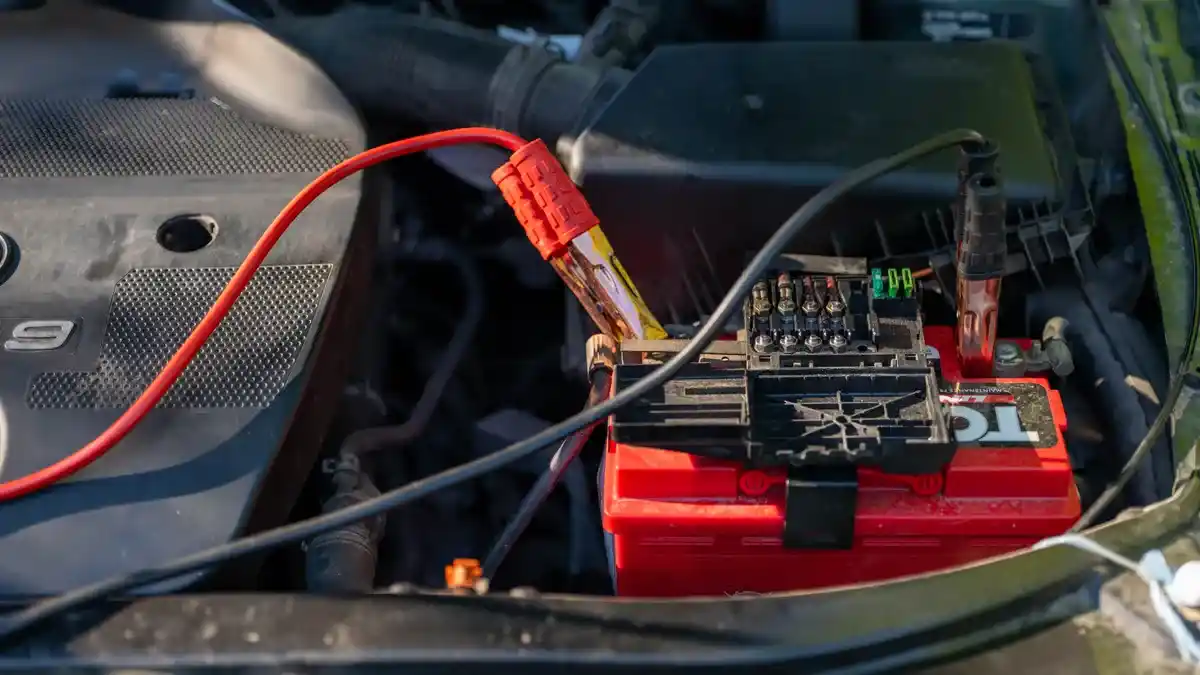
Picture this: the key is in START, the dash lights dim, and the clicking comes from under the hood or right near the starter. That sound is the starter solenoid trying to close, then dropping out because the voltage cannot hold.
Inside the solenoid, an electromagnetic coil pulls a plunger. That plunger bridges the plunger contact, which sends battery power to the starter motor. If the voltage falls too far, the magnetic pull weakens and the contact opens. The cycle repeats until you release the key.
Common fault patterns show up this way:
- Rapid click, no crank: the solenoid is cycling because voltage is collapsing.
- Click slows down over several tries: the jump setup may be marginal, or the donor battery is sagging.
- Lights stay bright but the starter clicks: the issue may be local to the starter feed, the ground path, or the solenoid itself.
- One loud click after a jump: that points more toward a stuck starter or a mechanical issue than a pure low-voltage problem.
The term to keep in mind is insufficient voltage at the starter solenoid. That is the symptom you are chasing, not just “a bad battery.” A battery can be weak and a jumper setup can still fail if the current has to pass through one rusty clamp or one loose ground strap.
Authoritative references on starting-circuit voltage drop and battery testing are published by the Battery Council International and by many vehicle makers’ service manuals. If you have a scan tool and factory data, follow the model-specific test path.
Check the jump connection first, not last
Picture this: the cables are on, the donor car is running, and you assume the setup must be good because the clamps are attached. That assumption wastes time. A high resistance terminal connection can stop a jump cold even when everything looks fine.
Start with the simplest physical checks before you blame the starter. A bad contact on either battery can create enough voltage drop under load to make the solenoid chatter.
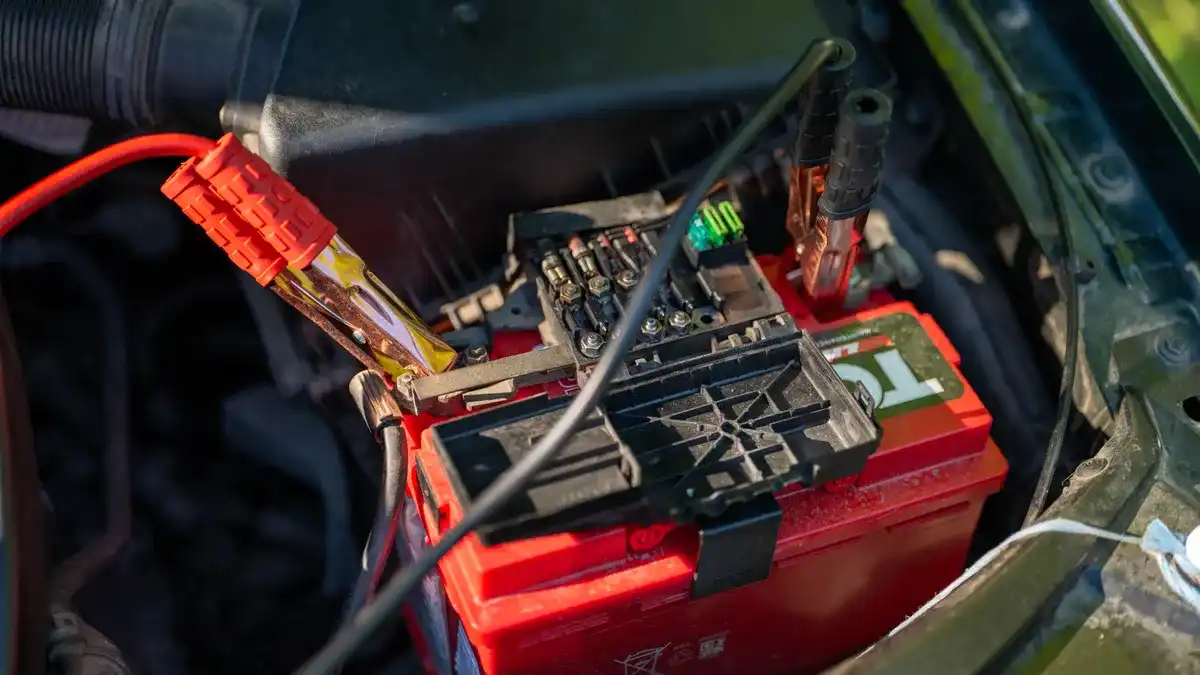
- Clamp directly to clean metal. Put the positive clamp on the battery post, not on a corroded bolt head or a painted accessory lug. Put the negative clamp on a clean engine bracket or block, not on a weak body ground.
- Wiggle each clamp once. A clamp that shifts, twists, or sparks is not gripping well enough. Tight jaws matter more than cable length.
- Look for white or green buildup. Corrosion on the terminal surface acts like a resistor. Even a thin layer can ruin current flow.
- Make the final ground at the engine. A chassis ground can be fine, but a rusty strap or painted fender can steal current before it reaches the starter.
- Try the jump again only after the contact points are clean and tight. If the clicking changes or stops, the problem was connection quality, not the starter motor itself.
Do not use the size of the spark as your guide. A spark can come from a poor connection, a live circuit, or a bad clamp angle. What matters is whether the starter sees enough current to stay engaged.
If you have a meter, you can check battery voltage at rest and while trying to crank. A reading that collapses under load tells you more than the battery label ever will. If you do not have a meter, the physical contact check still catches many failed jump attempts.
Follow this troubleshooting order from easiest to harder
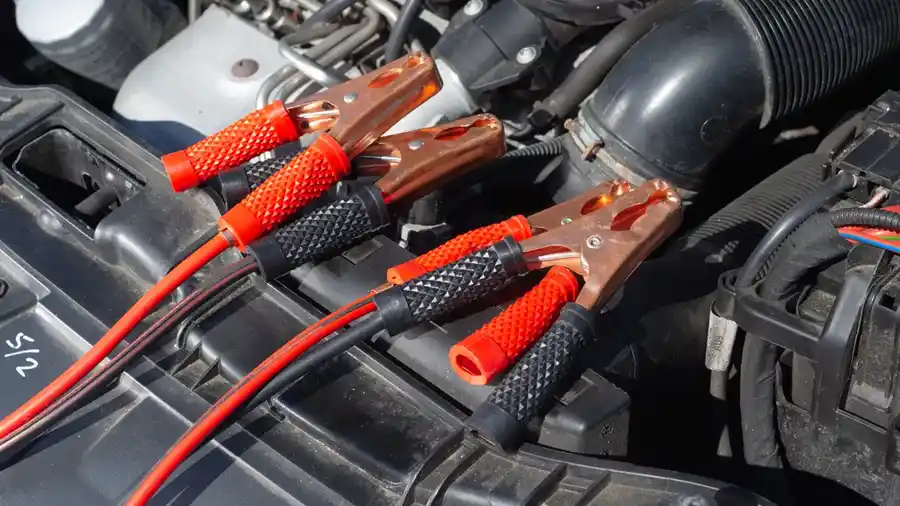
Picture this: you want one path, not a pile of guesses. Start with the outside of the circuit, then work inward toward the starter, because the weak link is often where current enters or leaves the system.
- Verify the donor setup. Use a known-good jump source, not a battery that was already cranking another vehicle. If the donor is weak, the clicked result will repeat.
- Move the clamps to fresh metal. Clean battery posts, then clamp tight. If the battery has side posts, make sure the adapter surfaces are clean and snug.
- Wait 2 to 3 minutes. Let the donor battery help stabilize the weak battery before you try to crank again.
- Try to start while holding the cables still. If the engine suddenly cranks, the connection was the issue.
- Check the ground path. Move the negative clamp from the battery post to the engine block. A bad ground strap can cause exactly the rapid-click symptom.
- Listen for one heavy click instead of many light ones. That shift can separate a voltage problem from a solenoid or starter issue.
- Stop if the cables heat up. Warm clamps or cable insulation mean too much resistance somewhere in the path.
- If the click remains rapid with clean, tight connections, move to starter diagnosis. At that point, the problem is likely in the starter solenoid, starter motor, or the heavy cable between them.
A good diagnostic habit is to change only one thing at a time. If you move both clamps, swap batteries, and rev the donor car all at once, you never learn which change mattered.
For a detailed understanding of starting-circuit current flow, SAE service material and vehicle manufacturer troubleshooting charts are the right references. They all point back to the same idea: the starter needs real current, not just attached cables.
When the starter itself is the likely problem
Picture this: the jump connections are clean, the donor battery is strong, and the car still answers with the same fast clicking. At that point, the starter solenoid rapid clicking may be coming from a worn solenoid, a bad internal contact, or a starter that can’t turn under load.
A failing starter can still click because the solenoid coil works well enough to move, but the main contacts inside the unit do not carry full current. Heat, wear, and pitted plunger contact surfaces make that failure worse. If the starter motor has a dead spot, the solenoid may cycle because the armature is not drawing current the way it should.
Signs that point past the jump setup:
- The click is still rapid after clean clamps and a solid engine ground.
- The headlights stay steady, but the starter will not engage.
- A light tap on the starter housing changes the symptom, which can point to worn brushes or a sticky internal contact.
- The car starts normally after cooling down, then fails again when warm.
The drawback of this branch is that the symptom can look like a battery issue even when the battery is not the main fault. That is why many people replace the battery first and are surprised when nothing changes. It costs time and money, and it does not solve a bad solenoid.
This is where a shop test earns its keep. A proper voltage drop under load test at the starter feed and ground side can show whether the wiring is at fault or the starter itself is pulling the circuit down.
What not to keep trying
Picture this: you keep turning the key, the clicking keeps going, and the jumper cables stay connected while the donor car idles harder and harder. That can overheat cables, strain the donor charging system, and waste the battery charge you still need.
Do not keep cranking for long bursts. A starter circuit designed to draw heavy current can overheat fast when it is stuck in a low-voltage cycle. Short attempts are safer and easier to read.
Avoid these mistakes:
- Using thin or cheap jumper cables. Small-gauge cables add resistance and make voltage loss worse.
- Clamping onto dirty battery posts. Corrosion is enough to block a jump.
- Using a body ground with flaky paint or rust. The return path matters as much as the positive side.
- Assuming rapid clicking always means a dead battery. It often means the system cannot keep the solenoid pulled in, but it can also point to resistance or starter trouble.
- Continuing after the cables get hot. Heat means the circuit is fighting resistance.
If the car still clicks rapidly after a proper jump with clean contacts, stop the repeat attempts. At that stage, the better move is diagnosis of the starter circuit, not more key turns.
The truth is, a jump start only helps if the starter circuit can carry current cleanly from end to end. A bad battery can start the problem, but a bad connection can keep the problem alive after the jump.
What the most likely fix is, and when to get help
Picture this: you have already tried the jump, cleaned the posts, and checked the ground. The car still will not crank, and the same rapid clicking comes back every time. The most likely fix is a bad connection or failing starter solenoid that cannot hold voltage under load.
The practical order is simple:
- Clean and tighten the battery terminals.
- Move the ground clamp to the engine block.
- Try a known-good donor battery and cables.
- If the click stays rapid, test the starter circuit for voltage drop.
- If needed, inspect or replace the starter assembly.
Get help from a technician when the starter is buried under intake parts, when the cables heat up fast, or when the same symptom returns after the jump setup has been confirmed good. That is the point where the diagnosis needs a meter, service data, and access under the car.
This page fits the bigger car won’t jump start troubleshooting flow, but its answer is narrower: rapid clicking during a jump means the solenoid is not seeing stable current. That usually comes from resistance, not mystery.
Key Takeaways
- Rapid clicking during a jump means the starter circuit is losing power as soon as the solenoid tries to hold.
- Clean, tight clamps on bright metal matter as much as the battery itself.
- A bad ground path can mimic a dead battery and still defeat a jump.
- If the clicking survives a proper jump setup, the starter solenoid or starter assembly moves to the top of the list.
- Hot cables, weak donor batteries, and rusty terminals all point to current loss under load.
What does a rapid clicking sound mean when jumping a car?
A rapid clicking sound usually means the starter solenoid keeps trying to engage, then dropping out because voltage falls too far. That points to voltage drop under load, often from weak jump connections, poor grounds, or a battery that cannot supply enough current. It is not the same as a single heavy click.
Does clicking mean the starter is bad or the battery is dead?
Clicking can mean either one, but rapid clicking during a jump often points first to connection resistance or low system voltage. If the cables are clean, tight, and on good ground points, then the starter solenoid or starter assembly becomes more likely. The sound alone does not prove a bad battery.
Drafted with AI; not yet reviewed by a person.